Fatigue is one of the quietest but most dangerous causes of car crashes on Texas roads. Drivers often push through tiredness, long shifts, late-night travel, or long holiday routes without realising how quickly fatigue slows reaction time and decision making. The result can be the same as driving under the influence: delayed responses, drifting over lanes, and poor judgment when seconds matter.
According to TxDOT, more than 10,000 fatigue-related crashes occur in Texas every year, causing hundreds of serious injuries and dozens of deaths. Safety researchers believe the real number is even higher because fatigue often goes unreported unless a driver admits they fell asleep. Texas also leads the nation in several fatigue-related crash categories, with state reports showing that a significant share of fatal collisions involve tired or drowsy drivers.
This guide explains why fatigue is such a major danger, the signs drivers commonly miss, and what injured Texans can do to protect their rights.
Why Fatigue Causes So Many Texas Car Accidents
Fatigue affects the brain in ways most drivers do not recognise until it is too late. When a driver is tired, the brain struggles to stay alert, process information and react to changing road conditions.
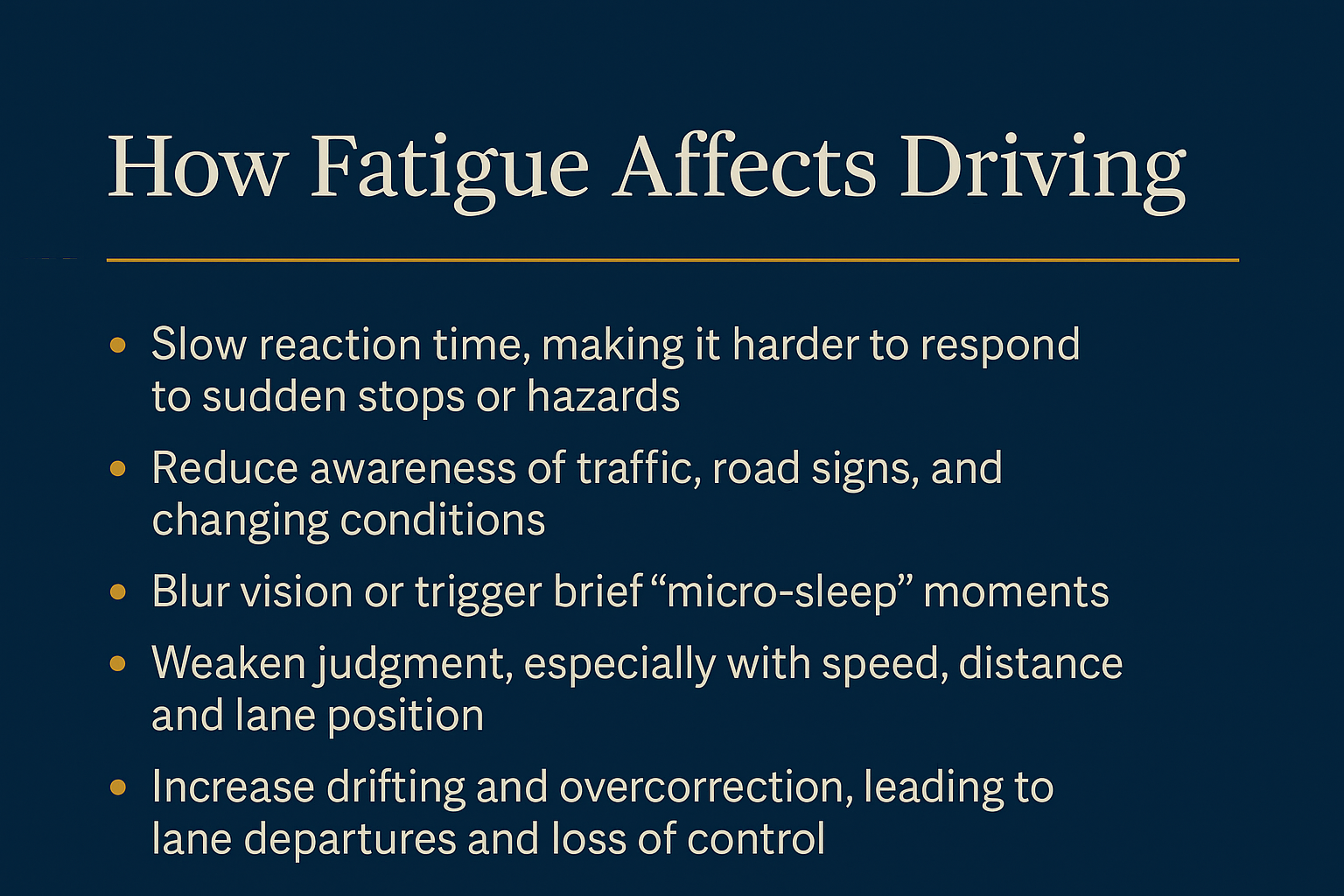
How fatigue affects driving
Fatigue can:
Slow reaction time, making it harder to respond to sudden stops or hazards
Reduce awareness of traffic, signals and roadside warnings
Blur vision or trigger “micro-sleep” episodes lasting a few seconds
Make it harder to judge distance, speed and gaps
Increase drifting, weaving or overcorrecting in emergencies
On long Texas highways, where speed limits are high and lighting may be limited, even a single second of delayed response can cause a severe crash.
Why Texas Sees So Many Fatigue-Related Crashes
Drawing from safety studies and statewide crash reviews, several Texas-specific factors make fatigue more common here than in many other states:
Long driving distances: Texas is vast. Drivers often travel hours between cities or across rural stretches without stopping, increasing fatigue risk.
High-stress or irregular work schedules: Nurses, first responders, plant workers, oil and gas employees, and shift workers often finish demanding shifts mentally drained.
Late-night and early-morning travel: Many fatigue-related crashes happen between midnight and 6 a.m., the body’s natural “low alertness” time.
Holiday and weekend road trips: Texas sees higher fatigue-related crashes during long weekends, school breaks, and holiday travel periods.
Distraction-related fatigue: Heavy traffic, long workdays and extended screen time can mentally exhaust drivers before they even get behind the wheel.
Undiagnosed sleep disorders: Conditions like sleep apnea can cause momentary loss of awareness, even when a driver believes they slept “enough.”
Warning Signs of Fatigue That Drivers Often Miss
Most drivers do not realise they are becoming unsafe. Common warning signs include:
Heavy eyelids or frequent blinking
Missing exits or road signs
Drifting over lane lines
Difficulty concentrating or remembering the last few miles
Irritability or restlessness
Head drooping or “nodding off”
If a driver notices any of these signs, the safest action is to pull over and rest.
Who Is Most at Risk for Fatigue-Related Crashes in Texas?
Certain groups face higher risk:
Young drivers and college students
Shift workers and overnight employees
Truck drivers and delivery workers
Drivers with untreated sleep disorders
Parents of newborns or young children
Travellers leaving early or returning late
Understanding these risks helps Texans make safer choices, especially during long-distance travel.
What To Do After a Texas Car Accident Caused by Fatigue
If you believe fatigue played a role in your crash, the steps you take next are important for your safety and for your claim.
Call 911 immediately: A police report helps document signs of fatigue, drifting, inconsistent speed or a driver admitting they were tired.
Get medical care: Some injuries take hours or days to appear. A medical exam provides documentation linking your injuries to the crash
Document what you observed: If the other driver looked tired, yawned repeatedly, was confused or admitted they were exhausted, write it down.
Inform your insurance company: Give the basic facts without guessing, apologising or accepting blame.
Speak with a Texas car accident lawyer: Proving fatigue often requires evidence such as driving logs, work schedules, phone data, toxicology screens, witness statements, and patterns of behaviour leading up to the crash.
If You Were Hurt by a Fatigued Driver, You Don’t Have to Navigate This Alone
A fatigue-related crash can leave you in pain, overwhelmed, and unsure where to turn. Dealing with insurance companies while recovering from injuries adds even more stress. At Chad Jones Law, we help Texans understand their rights, communicate with insurers, and work toward fair compensation.
You deserve clarity, support, and a team that stands with you as you move forward. Contact us now!