Poor road conditions can turn an ordinary drive into a life-changing event. If you’ve been hurt in a crash because of a roadway hazard in Texas, you’re not alone, and you have rights. This guide explains how Texas car accidents happen when the road itself is unsafe, who might be responsible, and how the law works to protect you.
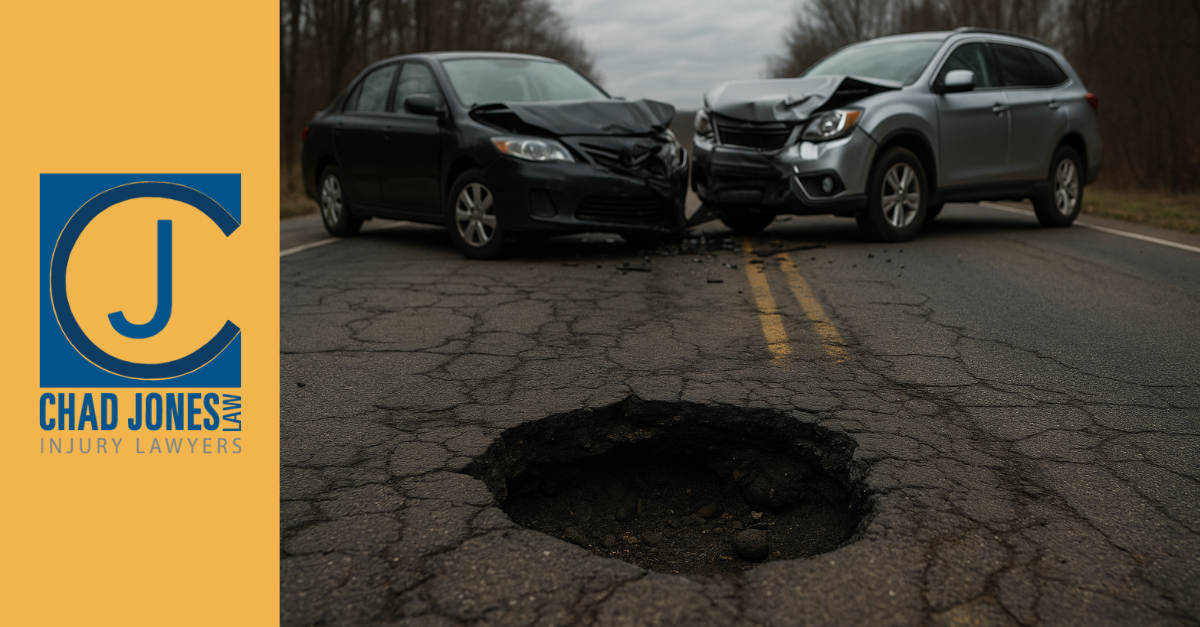
Poor road conditions include deep potholes, cracked pavement, faded lane markings, standing water, missing guardrails, or unsafe construction zones. These hazards can directly cause Texas car accidents by affecting traction, visibility, and a driver’s ability to react safely.
When a crash occurs because the roadway was unsafe, the issue is more than a simple collision; it’s a failure in road maintenance or design. Knowing how these hazards contribute to Texas car accidents helps you understand where liability might fall.
Potholes and worn surfaces can lead to tire blowouts, alignment issues, or sudden swerves. These hazards are common contributors to Texas car accidents on city streets and rural roads.
Poor drainage and standing water increase the risk of hydroplaning. Slick surfaces after rain also raise the likelihood of Texas car accidents, especially on highways and high-speed roads.
When drivers cannot see hazards or lane edges, the chance of a collision increases. Unsafe lighting or missing signs often play a role in Texas car accidents during low-visibility conditions.
Unmarked lane shifts, uneven pavement, and unclear detours pose dangers. Many Texas car accidents happen in construction zones that lack proper warning signs or barriers.
Objects on the roadway can force sudden swerving or hard braking, often causing multi-vehicle collisions. Debris-related crashes are a significant part of Texas car accidents involving poor road maintenance or failed cleanup.
Liability depends on who was responsible for maintaining or controlling the area where the crash happened.
Cities, counties and the State of Texas may be liable under the Texas Tort Claims Act (TTCA) when a road hazard they knew or should have known about causes injury.
Key points:
If a construction company created an unsafe condition, like an unmarked drop-off or missing barrier, it may be responsible.
Another driver may share blame if they drove too fast for conditions or reacted in an unsafe way.
Texas uses a modified comparative fault system. If multiple parties share blame, liability may be divided based on each party’s role in the crash.
Strong evidence strengthens Texas car accident claims involving road hazards.
You may need:
This evidence helps show that the hazard existed, that the responsible party failed to address it, and that it directly caused the crash.
To recover, you must show duty, breach, causation, and damages, all of which apply in Texas car accidents involving poor road conditions.
The TTCA outlines when a government can be sued.
Key rules include:
Most personal injury claims in Texas must be filed within two years.
Government claims still follow the two-year limit but require the six-month notice.
You may be able to recover:
Damages depend on the extent of injury and the evidence connecting the crash to the road hazard.
Our team investigates Texas car accidents involving potholes, poor drainage, missing signs and unsafe construction zones. We gather the evidence needed to support your claim, work with accident reconstruction experts, secure maintenance records and guide you through the timelines that apply to governmental liability.
We focus on clear answers, a steady process and a plan that supports your recovery.
Yes, but the TTCA limits when and how. Notice must be given within six months.
You can still recover under comparative fault rules if your share of blame is under 51%.
Not always. If drainage, signage, or road design worsened the hazard, liability may still exist.
Two years for most claims. Government claims require six-month notice plus the two-year deadline.
Yes. Some functions are immune; some are not. Liability depends on the type of activity.
If a road hazard, whether a pothole, standing water, missing sign, or unsafe construction zone, played a role in your crash, you deserve clarity and support. These cases are complex, time-sensitive, and evidence-heavy. You don’t have to navigate them alone.
Contact our team of expert car accident attorneys for a free, no-obligation case review.