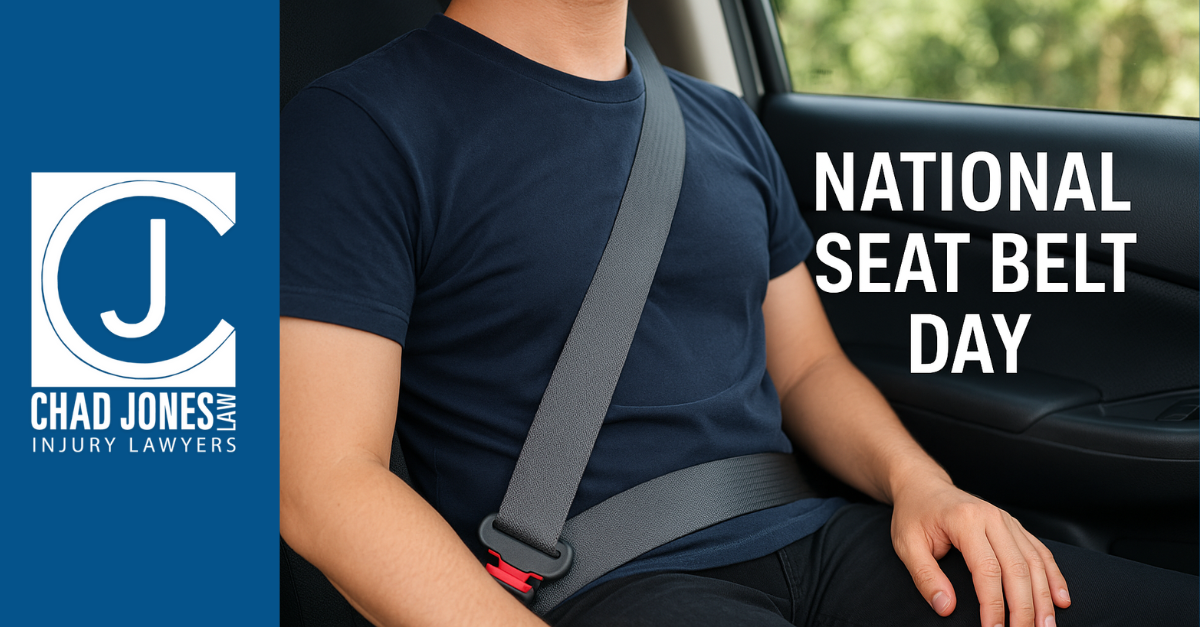
If you have ever sat behind the wheel and felt that strange mix of routine and responsibility, you know how easy it is to forget the quiet risks that live on the road. Most drives feel familiar. Most routes feel safe. Then one unexpected moment, one swerve, one hit of the brakes, one reckless driver, reminds you how fragile the human body is inside a speeding machine. National Seat Belt Day exists because those moments happen far more often than we admit, and because a single click of a buckle can be the difference between walking away and never making it home.
This day is more than a reminder to buckle up. It is a chance to look at the history, the science, the human stories and the simple truth that seat belts save thousands of lives every year.
National Seat Belt Day is observed every year on November 14. The date honors the invention of the modern three point seat belt, which Volvo introduced in 1959. Instead of keeping the patent for themselves, Volvo opened it to the world. They valued human life more than exclusive rights, and that single decision has protected millions of people across decades.
This day is about recognition, but it is also about awareness. Despite decades of education, many people still skip their seat belts on short trips, in back seats, or when they feel comfortable. The goal of this day is not to shame or lecture. It is to remind us how quickly a routine drive can turn into something life changing, and how much protection a simple habit can provide.
Before the modern design, seat belts were little more than lap straps. They offered minimal support and were not widely used. Many drivers believed they could brace themselves with their hands, which research later proved false.
Volvo engineer Nils Bohlin created the design we know today in 1959. The three-point system secured both the upper and lower body in a single motion. This was a major step forward in biomechanics and crash safety.
In 1968, the United States required all passenger vehicles to include seat belts as standard equipment. Wearing them became mandatory in Texas in 1985. Over the years, campaigns like Click It or Ticket helped change public attitudes and increase use.
Understanding why seat belts work does not require a physics degree. It requires one simple idea: your body keeps moving even when your car stops.
When a vehicle collides with another object, it stops or slows rapidly. Your body does not. If you are unrestrained, you continue moving at the same speed until something stops you. That something is often the steering wheel, dashboard, windshield or the road outside the vehicle.
A seat belt works by:
Without a seat belt, an airbag can do more harm than good. The belt is what places your body in the safest position during deployment.
The consequences are not theoretical. They are documented every single year.
According to the National Highway Traffic Safety Administration:
Being thrown from the vehicle is one of the strongest predictors of death in a crash. Seat belts reduce the risk of ejection by nearly 99 percent.
Most fatal crashes occur within 5 miles of home. Familiar roads do not eliminate danger. They often increase it because people let their guard down.
An unbelted back seat passenger can injure or kill someone in the front seat. The force created during a crash is powerful enough to propel an adult forward with deadly impact.
Children need extra protection. Their bones, muscles and ligaments cannot handle impact in the same way as adults. Proper restraints are essential.
Texas law requires a proper child restraint until the child is at least 8 years old or 4 feet 9 inches tall. TXDOT offers fitting stations statewide to help parents check installation.
Crashes often involve someone else. A drunk driver. A distracted driver. A speeding driver. Your skill does not protect you from their choices.
Seat belts keep you conscious. Conscious people escape faster.
Airbags rely on proper body position. Seat belts ensure that position.
Rear seat belts are just as important. Unrestrained passengers become projectiles.
A belt only works when used the right way.
These things matter. Small adjustments can change the outcome of a crash.
Texas roads are busy, long and often unpredictable. Distracted driving, speeding, heavy traffic and rural highways all create risk. National Seat Belt Day encourages communities to talk openly about these risks and the habits that protect us.
When families buckle up, communities become safer.
When teens develop good habits early, long term safety improves.
When parents model consistent behavior, children learn to value their own safety.
This day is about connection and responsibility. It is about choosing safety even when the road feels familiar.
At Chad Jones Law, we meet people on the worst days of their lives. We see what serious crashes do to families and how the smallest choices often make the biggest difference. We support National Seat Belt Day because we believe in prevention as much as protection. We want fewer families to face loss. We want safer roads for children, teens, adults and seniors.
Our work is not only about representing people after a crash. It is about helping communities understand how to reduce the chances of being in one. Wearing a seat belt is one of the simplest, most effective ways to stay safe on Texas roads. We stand behind that message because we have seen the outcomes on both sides.
Seat belts are not exciting. They do not feel heroic or powerful. But they protect the most valuable thing we have: the lives of the people we care about. National Seat Belt Day is a call to pause, breathe and choose safety. The next time you get in a car, take the extra second. Make it a habit that feels as natural as turning the key.
Every seat.
Every trip.
Every time.